
The Path to Physical AI
Where statistical AI approximates and guesses, sgdl computes and knows — enabling machines to perceive, reason about, and act in the physical world.
Why sgdl
A Foundation Unlike Any Other
40 Years of R&D
Founded on Jean-François Rotgé's doctoral thesis The Arithmetics of Forms (1997), sgdl stands at the culmination of a twenty-five-century intellectual lineage — from Euclid's axiomatic geometry through Desargues, Hilbert, Noether, Gödel, Church, and Gray — four decades of continuous research from pure mathematics to industrial deployment.
21 Interconnected Patents
A mature portfolio of 21 interconnected patents covering spatial encoding, volumetric computation, and cryptographic applications — forming an interlocking fortress of intellectual property ready for industrial deployment.
Exact Intelligence, Zero Hallucination
Where statistical AI approximates and compresses regularities from training data, sgdl computes from structure. Built exclusively on natural integer arithmetic and Primitive Recursive Functions, it runs on standard CPUs with deterministic results — no floating-point errors, no approximation, no hallucination. In continuous spatial domains, statistical approximation is not a necessary truth but a temporary instrumental limitation.
The Paradigm Shift
From Prediction to Action
The AI landscape is evolving from systems that predict to systems that act. Physical AI requires machines that can perceive environments, make precise decisions, and interact with the real world — from autonomous vehicles and surgical robots to synthetic cities, low-altitude economy, and robotic teleoperation. A surgical robot operating near the spinal cord cannot approximate. An autonomous drone navigating urban airspace cannot hallucinate. These mission-critical domains demand the exact, structural computation that only sgdl provides.
The historian Ian Hacking traced the birth of probability in 1660 to the absence of formal tools for mastering continuous space. Three centuries later, the Arithmetics of Forms closes that chapter: Exact Intelligence replaces probabilistic approximation in every spatial domain where certainty is non-negotiable.
The Virtuous Link
Connecting Rules and Data
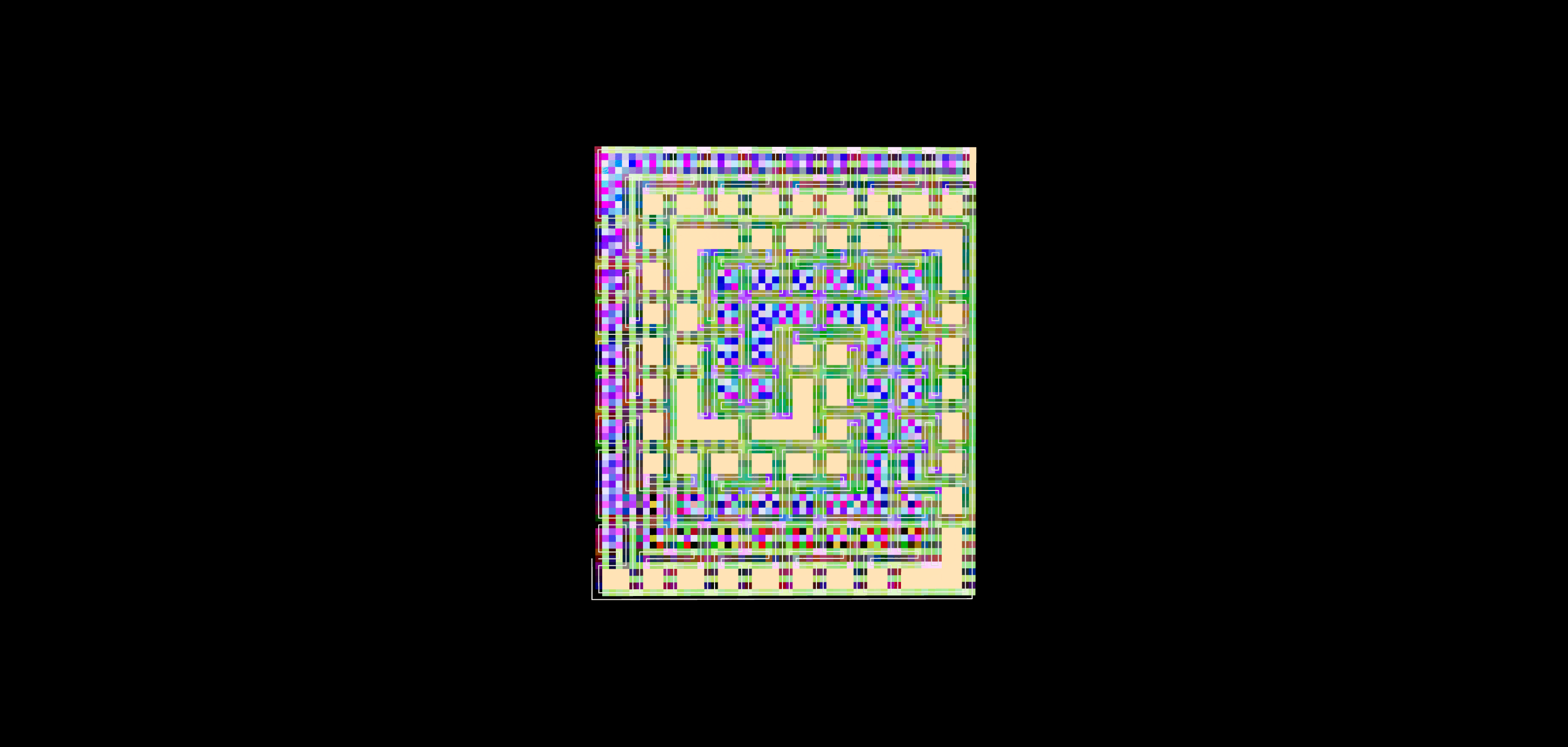
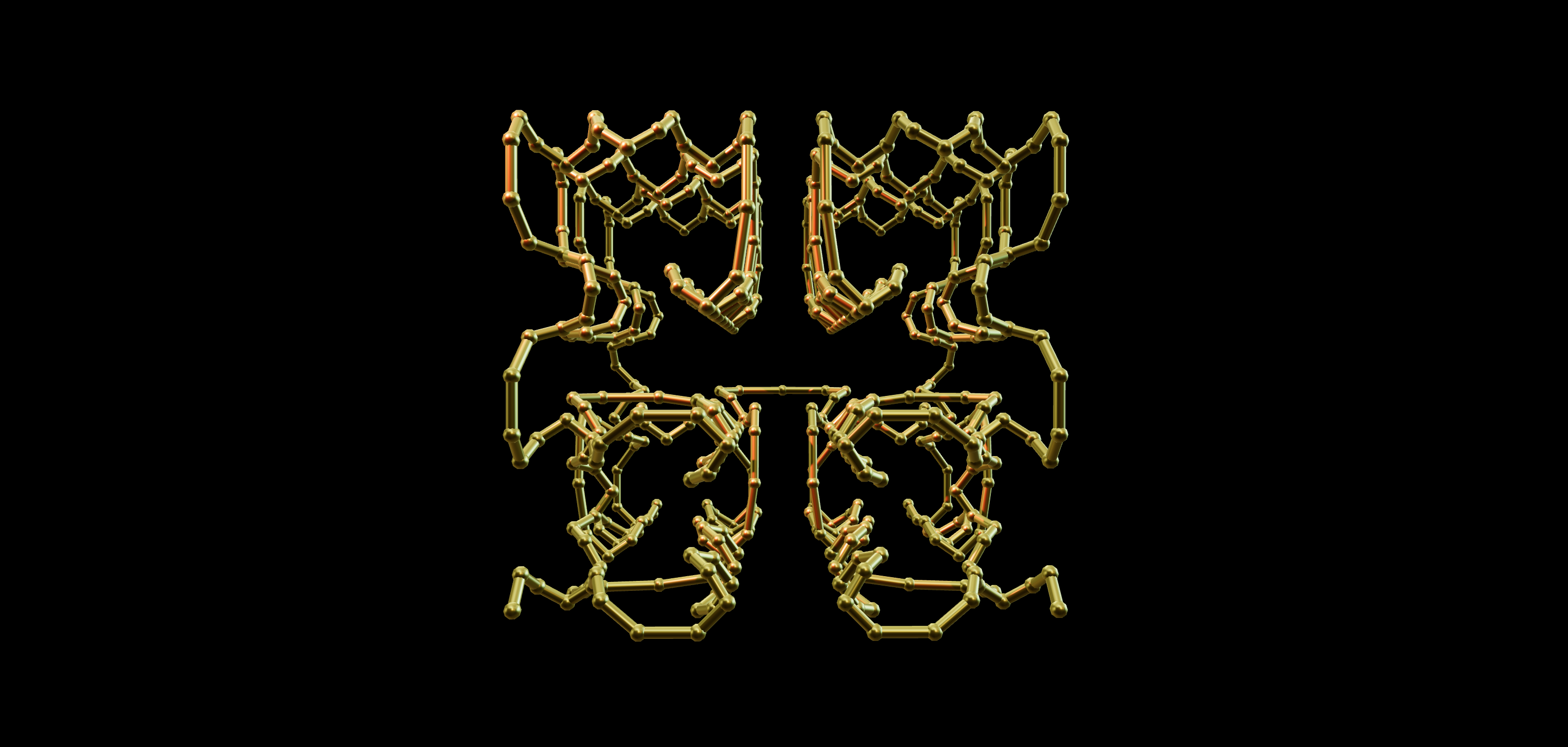
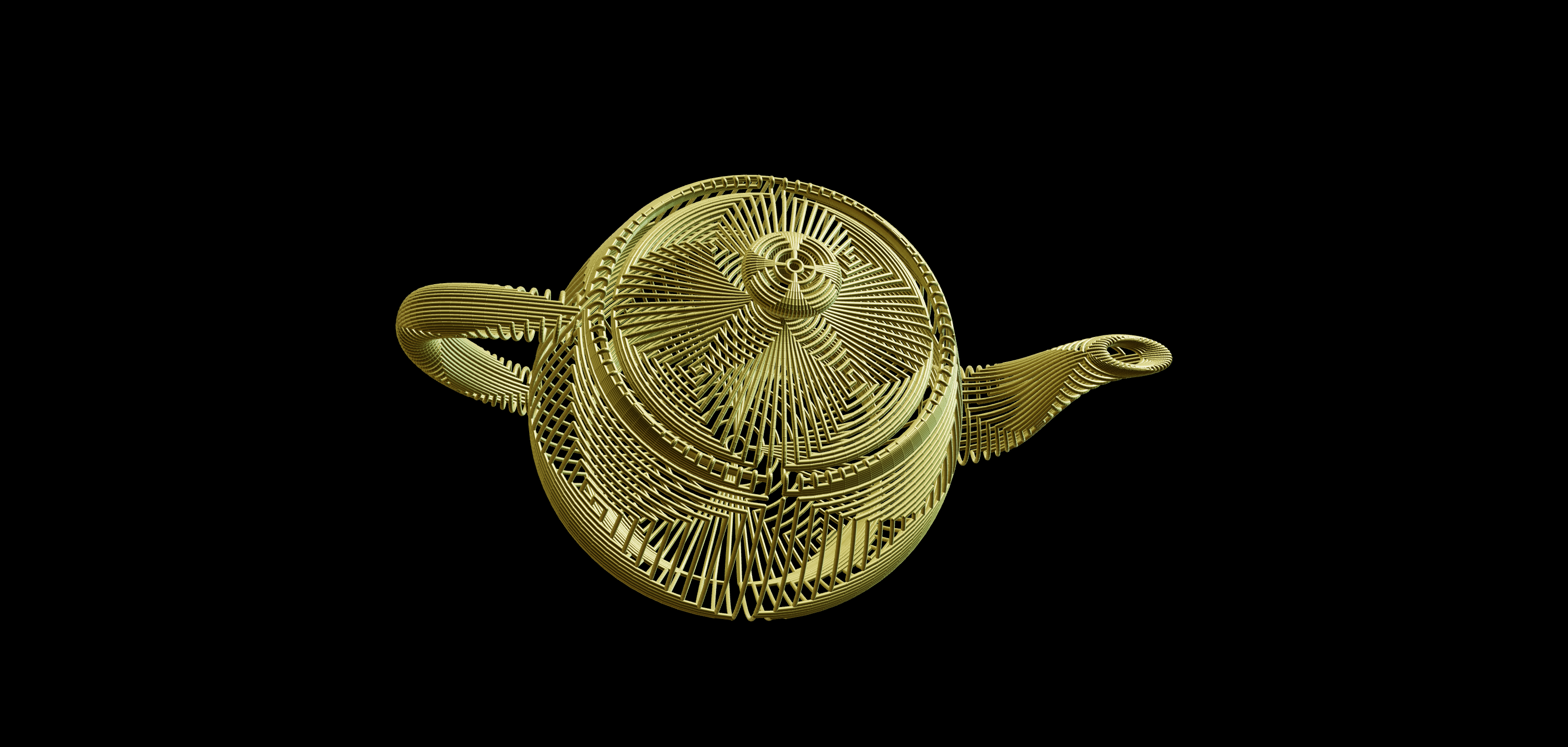
The Arithmetics of Forms assigns every point in space an integer density, then encodes entire volumetric structures into single BigNums via Gray metacurves — creating a lossless, reversible bridge between symbolic rules and statistical data.
The Exolanguage
Ariadne: Autonomous Spatial Reasoning
The Ariadne Exolanguage is an autonomous symbolic spatial reasoning system. Born from a mechanism discovered in the 1990s at the Université de Montréal, it unifies five pillars of machine spatial knowledge through elementary arithmetic: Logic, Topology, Morphogenesis, Indexing, and Encoding.
A triple system enabling representation, genesis, and communication of spatial information — designed from the ground up for machines (AI2AI), inherently non-anthropomorphic and self-evolving. It represents the ultimate evolution of the coupling of Lambda Calculus and Primitive Recursive Functions for spatial reasoning.
The Five Pillars
Logic
Space Logic — spatial inference and decision
Topology
Arithmetic of Forms — interior/exterior/boundary
Morphogenesis
Projective geometry — form generation and crystalline structures
Indexing
Gray metacurves — spatial addressing and traversal
Encoding
Boustrophedonic geometry — compression and encryption

Proof of Traction
Trusted by World-Class Partners
Canadian Space Agency
Developed a robotic arm simulator for the International Space Station's Canadarm, used successfully for 6 years.
CERN
Collaborating on 4 projects including spatial intelligence for volumetric brain imaging and structural anomaly detection.

Spineart
Creating real-time alignment solutions between 3D preoperative and 2D intraoperative imaging for spinal implants.

AOUSD
Contributing non-anthropomorphic spatial reasoning expertise to advance open standards for 3D simulations and AI-driven workflows, alongside NVIDIA, Apple, Amazon.
Ready to explore the mathematics of Physical AI?
Learn how sgdl's Arithmetics of Forms can power your next breakthrough.