TECHNOLOGY
The Arithmetics of Forms
Replacing Binary Constructive Solid Geometry with Ternary Integer Arithmetic
A non-anthropomorphic mathematical framework rooted in the 1997 SGDL paradigm by Jean-François Rotgé. Physical structure is decomposed into elementary building blocks through pure integer arithmetic — no floating-point, no division, no approximation. Where Tarski proved geometry complete because it cannot define the integers, Rotgé reverses the relationship: using integers to reconstruct a total, decidable geometry — Exact Intelligence.
THE CHALLENGE
Rooting Spatial Logic in Pure Numbers
Standard systems patch geometry and logic together through syntax. The SGDL approach unifies geometry and topology upstream through the arithmetic of Primitive Recursive Functions. Space is quantified before a computer procedure is ever written. Three classical approaches have been proposed:
Mechanistic
Turing machines — step-by-step procedural instructions. The path taken by most CAD systems.
Used by traditional CAD
Linguistic
Formal grammars — Chomsky, Post. Shape described through rewriting rules and production systems.
Grammar-based systems
Functional-Arithmetic
Recursive functions, lambda calculus — Skolem, Gödel, Kleene, Church. Spatial form as the output of pure recursive functions on natural integers.
The SGDL path
In the arithmetic approach, geometric and combinatorial models are not separate — they are unified through arithmetic, a pillar of metamathematics. All constructive and logical processes of spatial arrangement are formalized as algorithms that are exclusively and purely arithmetic.
Modern statistical AI — the dominant paradigm — is an extreme instrumentalism: its knowledge is the weighted correlations most predictive of training data. It will fail whenever the structure of a new problem differs from the training distribution. sgdl takes the opposite posture: understand why the solution space has the shape it has, identify the invariants that constrain it, and derive the answer from first principles. The first posture scales with compute. The second scales with understanding.
“Arithmetic is transmuted into a metalanguage of spatial forms.”
Two Worlds That Need to Connect
Symbolic AI
- Reasons with logic and formal rules
- Based on programmed rules and knowledge
- Performant in structured, well-defined domains
- Explainable and traceable
- Limited when dealing with raw, unstructured data
Statistical AI
- Learns patterns directly from data
- Powered by LLMs and neural networks
- Performant for vision, translation, generation
- Scales with compute and data
- Approximative and black-box by nature
Neither approach alone can interact with the physical world. Their convergence gives rise to a new discipline: Physical AI.
The Emergence of Physical AI
Physical AI perceives the environment and acts in the real world. It powers robots, autonomous vehicles, surgical tools, and industrial automation — but also generative AI, synthetic cities, and low-altitude economy. It requires extreme reliability — there is no room for approximation when a robotic arm operates near a human body or a drone navigates urban airspace.
The Arithmetics of Forms provides exactly this: the deterministic, precise link between AI agents and deep-tech platforms that operate in physical space.
THE CORE MECHANISM
The Transmutation Principle
Geometry becomes arithmetic. Every spatial question becomes a calculation on integers.
The Computable Canvas
Every primitive geometry partitions space into three mathematical states. By assigning an integer “density” to these states, we transform physical space into an arithmetic canvas: density 0 means Void (outside), density 1 means Boundary, density 2 means Mass (inside).
The topological question “is this point inside?” becomes the arithmetic question “what is this number?” When multiple forms overlap, densities accumulate — the intersection of two solids has density 4, their shared boundary density 2.
The Design Logic Operators
Geometric operations map exactly to arithmetic operations. Each spatial combination of forms reduces to a simple calculation on their density values — turning CAD into algebra.
Geometry via Integer Addition
Shapes are literally added together like numbers. The resulting mathematical densities natively describe perfect topological regions without any complex geometric calculations. Multiplicity is preserved.
Addition Proof Diagram
The Arithmetic Toolset
Purely mathematical functions natively generate distinct topological regions simply by filtering for specific integer results. Every geometric operation reduces to a simple calculation on density values.
DLadd
+
Addition
Merge volumes — densities accumulate
DLmul
×
Multiplication
Logical conjunction — only shared mass
DLdif
−
Positive Difference
Carve away — F0 minus F1's influence
DLsab
|−|
Absolute Subtraction
Symmetric exclusion — XOR of forms
Purely mathematical functions natively generate distinct topological regions simply by filtering for specific integer results.
Live Design Logic Operations — the Arithmetics of Forms in action
Drag to rotate · Click for details
Union = Addition
Merge volumes — densities are added together.
Intersection = Multiplication
Keep the common part — densities are multiplied.
Difference = Subtraction
Remove material — densities are subtracted.
Symmetric Diff. = Abs. Subtraction
Exclusive zone — absolute difference of densities.
DLadd
Union = Addition
Merge volumes — densities are added together.
DLmul
Intersection = Multiplication
Keep the common part — densities are multiplied.
DLdif
Difference = Subtraction
Remove material — densities are subtracted.
DLsab
Symmetric Diff. = Abs. Subtraction
Exclusive zone — absolute difference of densities.
DLgcd
Greatest Common Volume = GCD
Largest shared structure — GCD of densities.
DLlcm
Smallest Enclosing Vol. = LCM
Minimal container — LCM of densities.
Arithmetizing Kleene's Ternary Logic: In the SGDL paradigm, we do not write complex geometric algorithms to find intersections or unions. We simply ask the primitive recursive function to evaluate the minimum or maximum integer between two density arrays. Logic is completely reduced to arithmetic. The dual operator DLdua inverts matter (swapping interior and exterior) while preserving boundaries — a self-inverse involution that validates the arithmetized De Morgan laws.
Max(x, y) Min(x, y) Max(Pos(x), y) SYSTEM ARCHITECTURE
The Architecture of Forms
Primitive Recursive Functions occupy the central position in the SGDL system. From this arithmetic nucleus, eight categories of Forms radiate outward — each representing a different facet of the same mathematical object.
ENCODING
FORMES
ENCODÉES
FORMES
PRÉCONTRAINTES
FORMES
POLYÉDRIQUES
FORMES
QUADRATIQUES
FONCTIONS
P. RÉCURSIVES
FORMES
LOGIQUES
FORMES
SIMPLICIALES
FORMES
PROGRAMMÉES
FORMES
VIRTUELLES
PROGRAMMING
Encoding
FORMES
ENCODÉES
Geometry
FORMES
PRÉCONTRAINTES
FORMES
POLYÉDRIQUES
FORMES
QUADRATIQUES
FONCTIONS
P. RÉCURSIVES
Arithmetic
FORMES
LOGIQUES
FORMES
SIMPLICIALES
Programming
FORMES
PROGRAMMÉES
FORMES
VIRTUELLES
Left Arm — Geometry
Quadratic Forms — Projective quadric surfaces: the geometric primitives, constructed synthetically without algebraic considerations.
Polyhedral Forms — Logical (and therefore arithmetic) combinations of degenerate quadratic forms. Polyhedra emerge from the same formalism as curved surfaces.
Preconstrained Forms — Forms governed by projective configurations — spatial scaffolds that transmit geometric constraints to the objects they support.
Right Arm — Arithmetic
Logical Forms — The equivalence between arithmetic operators and logical operators acting on Forms. Design Logic (DLadd, DLmul, DLdif...) is defined here.
Simplicial Forms — The junction between arithmetized logic and topology. Simplicial complexes are built from logical combinations of Forms, completing the arithmetic model of volumetric objects.
Downward — Programming
Programmed Forms — Functional programming via lambda calculus, integrating recursive arithmetic functions. The concepts of the first two sections are formalized into executable code — including a database system driven by the Arithmetics of Forms.
Virtual Forms — The final output: synthetic images and physical models generated by the SGDL system, validating the theory through millions of computations per image.
Upward — Encoding
Encoded Forms — The culmination of the pipeline: every volumetric structure is encoded into a single BigNum via Gray metacurves. The integer is the form; the form is the integer. This is the transmutation made concrete.
Adapted from Fig. 1.4 of J.F. Rotgé's doctoral thesis, “L'Arithmétique des Formes”, Université de Montréal, 1997.
THE OPERATIONAL SYSTEM
The Ariadne Exolanguage
The autonomous symbolic spatial reasoning system where all SGDL theories converge into a single operational platform.
The Ariadne Exolanguage is an autonomous symbolic spatial reasoning system born from a mechanism discovered in the 1990s at the Université de Montréal. It unifies the five pillars of machine spatial knowledge — Logic, Topology, Morphogenesis, Indexing, and Encoding — through elementary arithmetic.
It is a triple system enabling simultaneously the representation, the genesis (morphogenesis), and the communication of spatial information. Designed from the ground up for machines (AI2AI), it is inherently non-anthropomorphic and self-evolving.
Belonging to the class of mathematically-oriented Domain-Specific Languages (DSL), it represents for everything concerning spatial reasoning the ultimate evolution of the coupling of Lambda Calculus and Primitive Recursive Functions.
Logic
Space Logic
Topology
Densities
Morpho.
Quadrics
Indexing
MCG
Encoding
MALVES
SPATIAL ENCODING
1D → nD: The Space-Filling Bridge
How does an integer become a spatial coordinate — and vice versa? Space-Filling Curves provide the bijective mapping between a one-dimensional integer thread and multi-dimensional space.
A Space-Filling Curve (SFC) visits every cell of an n-dimensional grid in a single, continuous path — establishing a total order over all spatial points. The SGDL system uses families of Gray metacurves (MCG) that preserve locality: points close in space stay close along the 1D thread. This locality-preserving property is essential for both efficient volumetric computation and cryptographic encoding.
Because the mapping is bijective, every n-dimensional volumetric form can be encoded as a single integer — and every integer can be decoded back into the original form. This is the mechanism behind Encoded Forms, the topmost arm of the SGDL Architecture.
“Every spatial structure can be reduced to a single integer. The integer IS the form.”
The Paradigm Gap
Beyond B-Rep and CSG
Traditional Constructive Solid Geometry (CSG) relies on binary set theory. A point is either inside a shape (1), or outside (0). This fails at the boundary — in binary logic, the boundary requires complex self-referential calculation (intersection of the closure and the complement closure). Furthermore, set union destroys multiplicity: if Shape A and Shape B overlap, the shared geometric density is completely lost.
The Arithmetics of Forms replaces this binary illusion with ternary integer arithmetic based on Kleene's three-valued logic. Every natural integer maps to a unique volumetric form, and every form maps back to its integer — with the full richness of arithmetic operations preserved as geometric operations.
The boundary problem: In binary CSG, the boundary requires complex self-referential calculation (intersection of the closure and complement closure). In SGDL, the boundary is simply the integer 1 — inherent to the representation, not computed after the fact.
| CSG (Legacy) | SGDL (Arithmetic) | |
|---|---|---|
| Space States | 2 (Inside / Outside) | 3 (Outside / Boundary / Inside) |
| Logic Basis | Binary Boolean | Kleene Ternary Logic |
| Mathematical Root | Set Theory | Primitive Recursive Functions |
| Boundary Handling | Requires complex topological calculation | Inherent to the integer 1 |
| Multiplicity | Lost in union operations | Preserved via integer addition |
B-Rep
Boundary Representation
Lists surfaces — an extensional catalog of faces, edges, and vertices. No algebra on the geometry itself.
CSG
Constructive Solid Geometry
Boolean operations on primitives — powerful, but limited to a fixed vocabulary of shapes.
sgdl
Arithmetics of Forms
Integer ↔ Form bijection — full arithmetic on volumes. Shapes, operations, and encodings in a single computable system.
Key Properties
What makes the Arithmetics of Forms fundamentally different from statistical approaches.
Deterministic
Unlike probabilistic models, every computation produces exact, reproducible results with no randomness.
Precise
All computation uses exclusively natural integers — no floating-point numbers, no division, no rounding errors. Projective homogeneous coordinates ensure perfect precision through every calculation.
Frugal
CPU-native processing — no GPU clusters or data centers required. Orders of magnitude more efficient.
Economical
Dramatically lower infrastructure costs compared to GPU-dependent statistical approaches.
Unconditional
Projective geometry eliminates all singular configurations. The same algorithm works for every case — no IF/ELSE branching, no special-case handling. Parallel lines, degenerate surfaces, and edge cases are all treated uniformly.
Total
All operations are built on Primitive Recursive Functions (PRF), which are guaranteed to terminate. Every computation produces a result — no infinite loops, no undefined behavior, no crashes.
EXACT INTELLIGENCE IN ACTION
Where Approximation Is Not an Option
In continuous spatial domains, statistical approximation is not a necessary truth — it is a temporary instrumental limitation. The Arithmetics of Forms makes it obsolete in critical applications.
Autonomous Navigation
Obstacle recognition with 100% certainty in O(1) time — no training data, no rounding errors, no probabilistic confidence intervals.
Digital Twins & GIS
Regulatory boundaries as “high signs” — topologically exact, legally valid delimitations replacing the fuzzy zones of probabilistic segmentation.
Medical Imaging
Certification of organic structure connectivity via the topological invariant λ, eliminating false positives inherent to statistical segmentation models.
1 + 1 = 2
“We transform the notion of volume into integer arithmetic without division. The theoretical manipulation of whole numbers replaces set operations on volumes.”
By abandoning the binary constraints of set theory and embracing the ternary logic of integer arithmetic, the boundary problem vanishes. Logical operations and physical operations become mathematically identical. Arithmetic IS Geometry.
INTELLECTUAL PROPERTY
A Fortress of 21 Interconnected Patents
Since 2018, sgdl has focused its strategy on building a comprehensive intellectual property portfolio. Today, 21 patents form an interlocking system of protection covering the complete pipeline — from spatial encoding and volumetric computation to cryptographic applications.
Spatial Encoding & Indexation
Patents covering the MALVES coding system and multidimensional data indexing methods that transform physical objects into mathematical representations, enabling precise geolocation and spatial reasoning at any scale.
Cryptographic Applications
Patents on MCG (MetaCurve Gray) cryptographic stencils, providing unique encryption capabilities derived from space-filling curve signatures.
Volumetric Computation
Patents protecting the core Arithmetics of Forms pipeline — from projective quadric definitions through Design Logic operators to BigNum encoding.
All 21 patents are interconnected and mature, forming a unified system ready for industrial deployment across robotics, autonomous vehicles, medical imaging, defense, and materials science.
PROVEN IN THE FIELD
From Space Stations to Synthetic Cities
The Arithmetics of Forms is not theoretical speculation. It has been deployed in industrial systems since the late 1990s, validated in peer-reviewed publications and mission-critical environments.
ISS Canadarm2 & Dextre Simulator
Developed for the Canadian Space Agency to study astronaut skill degradation in orbit. SGDL provided pixel-exact rendering, cast shadow computation, and real-time collision detection for the complete ISS Mobile Servicing System — including Canadarm2's 7-DOF arm and Dextre's dual arms.
<2 MB
Entire ISS model compressed
P4 1.8 GHz
Real-time on a single laptop
50+ DOF
Elastic joints simulated
IAC-04-IAA.A.5.03 — Published at the International Astronautical Congress, 2004
Universal Solid 3D Format for Urban Simulation
A polynomial-based approach replacing conventional polygonal formats. Unifies CAD/CAM, GIS, AEC, and photogrammetry in a single volumetric representation — from individual barn details to entire states, with extremely compact data footprints.
~25,000 km²
Virtual Vermont — statewide
Real-time
On Bull Novascale parallel systems
Multi-layer
Topography, GIS, cadastral, transport
2007 Urban Remote Sensing Joint Event — IEEE, co-authored with J. Farret
SGDL-Scheme: the Manifesto (2000) — Presented at the Scheme and Functional Programming Workshop at Rice University, SGDL-Scheme is an absolutely pure functional language for volume programming: a geometric extension of Scheme where volume objects are manipulated as arithmetic expressions, compiled into optimized real-time pipelines, and evaluated at any point in space using only integer arithmetic.
VISUAL OUTPUT
The Mathematics Made Visible
Every image is the direct output of integer arithmetic operating on volumetric space. No floating-point, no approximation — pure computable geometry rendered via WebGL.
 © SGDL Innovation SA
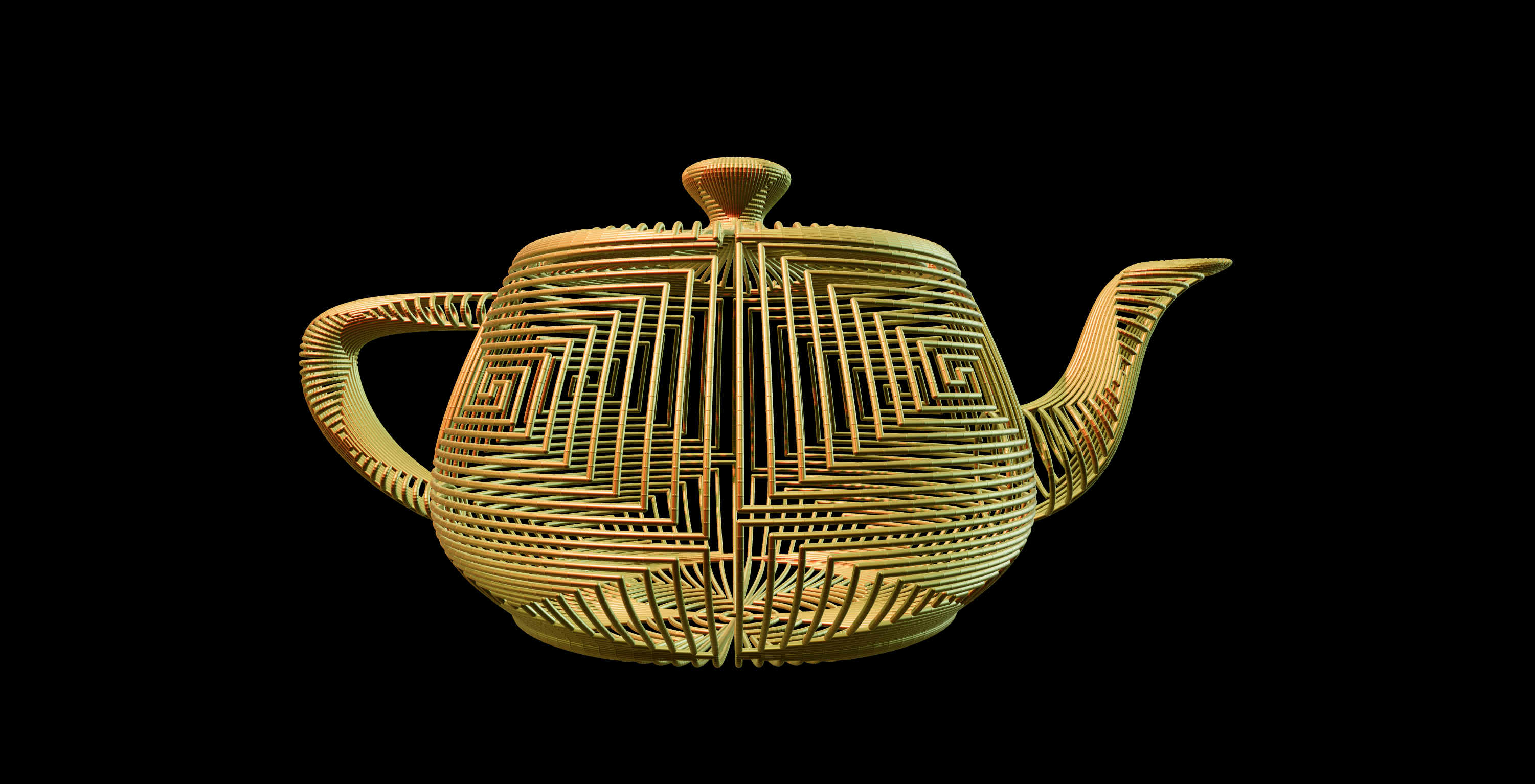
Space-Filling Curves
Gray Metacurves on Surfaces
Boustrophedonic path tracing the Utah teapot's Bézier patches
 © SGDL Innovation SA
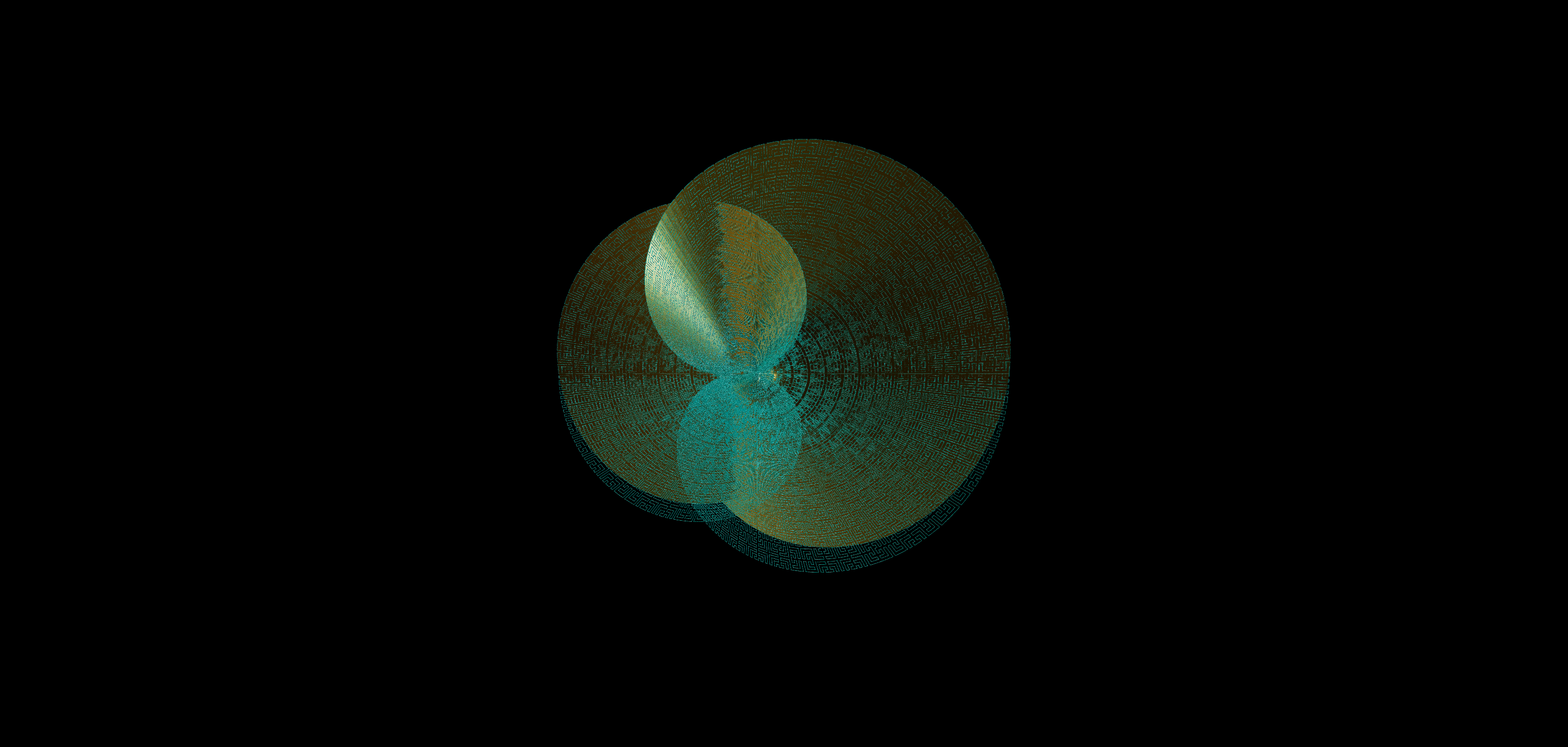
Hamiltonian Paths
Möbius Strip Traversal
Single path visiting every vertex on a non-orientable surface
 © SGDL Innovation SA
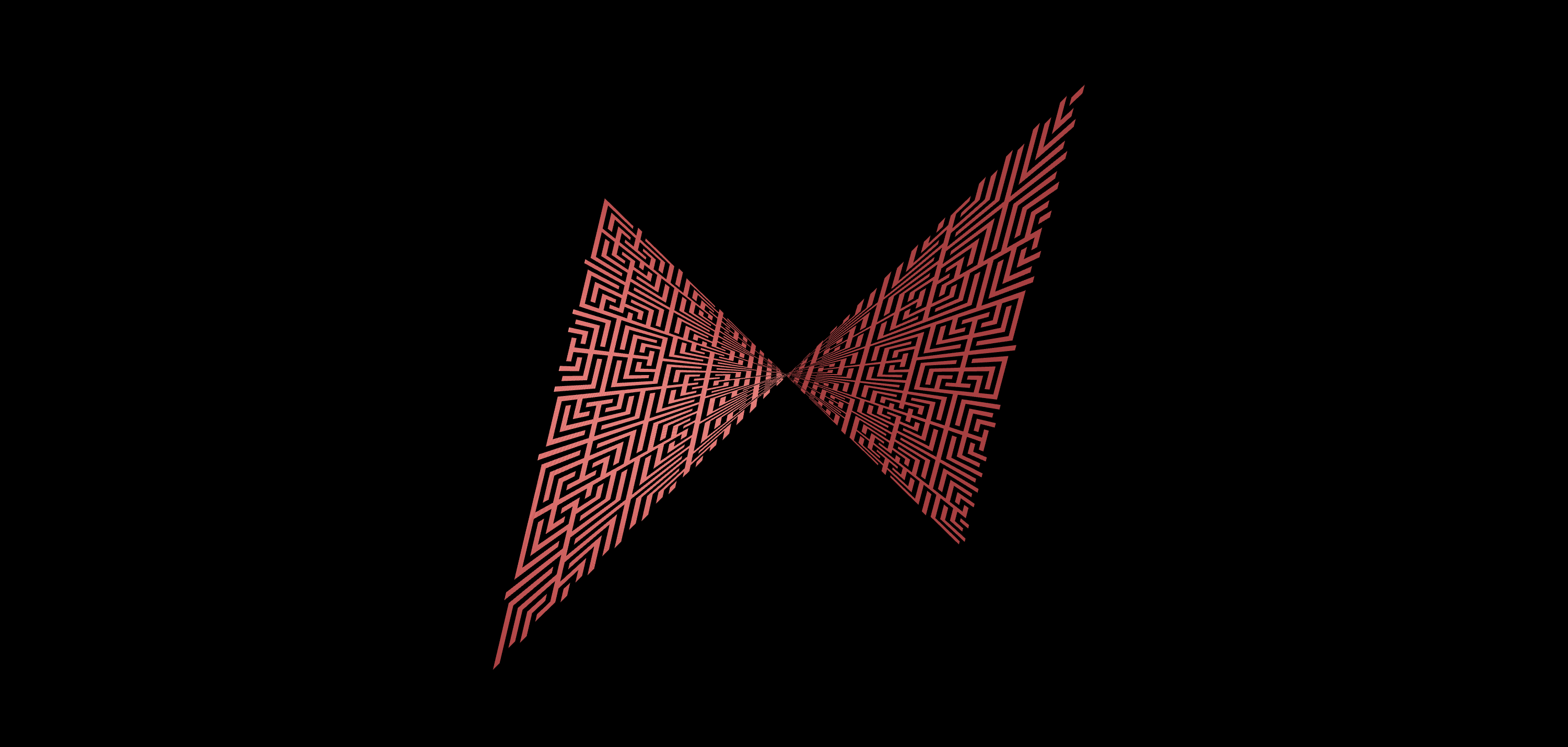
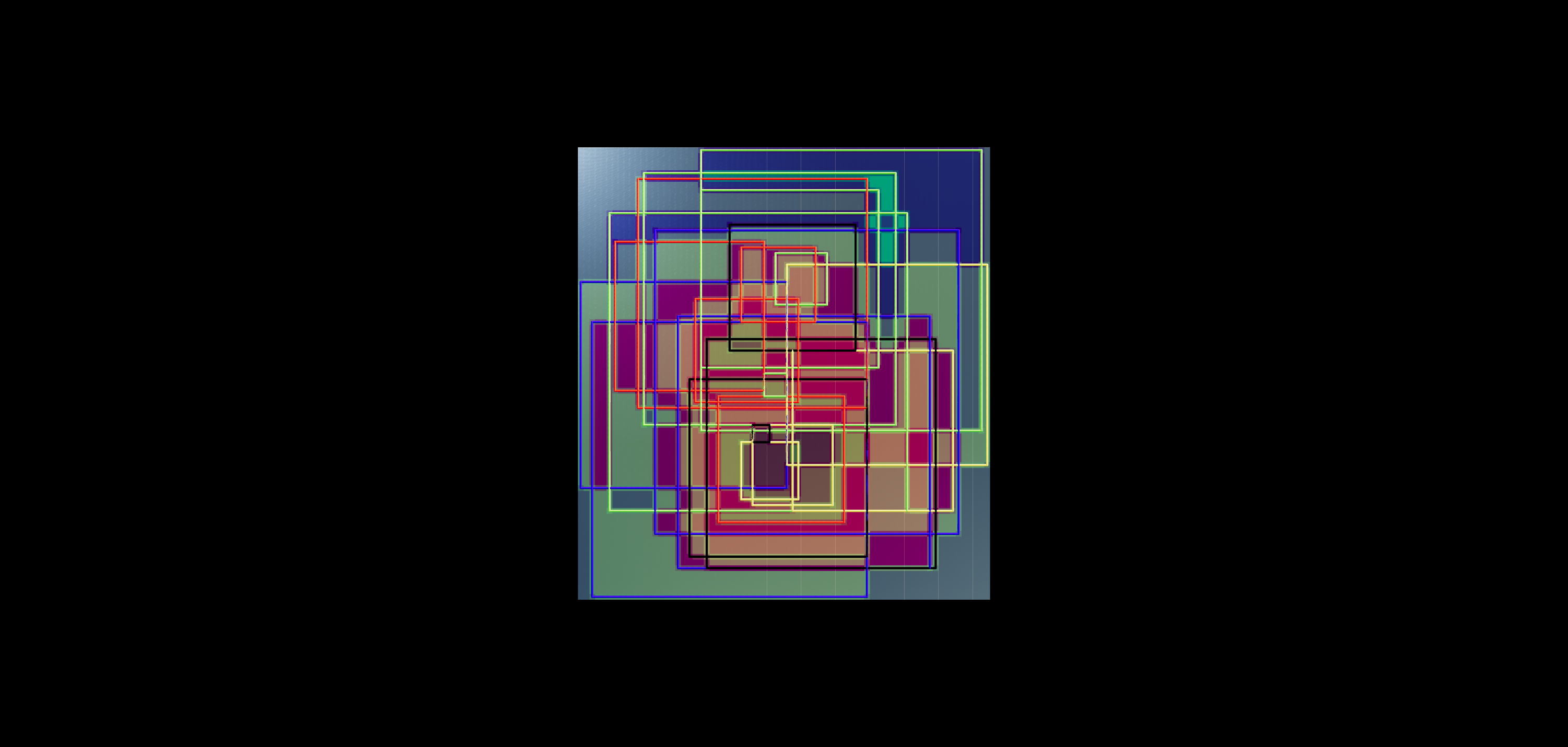
Stencil Buffers
Density-Field Clipping
Parabolic generator creating periodic filtering via DLrmd
 © SGDL Innovation SA
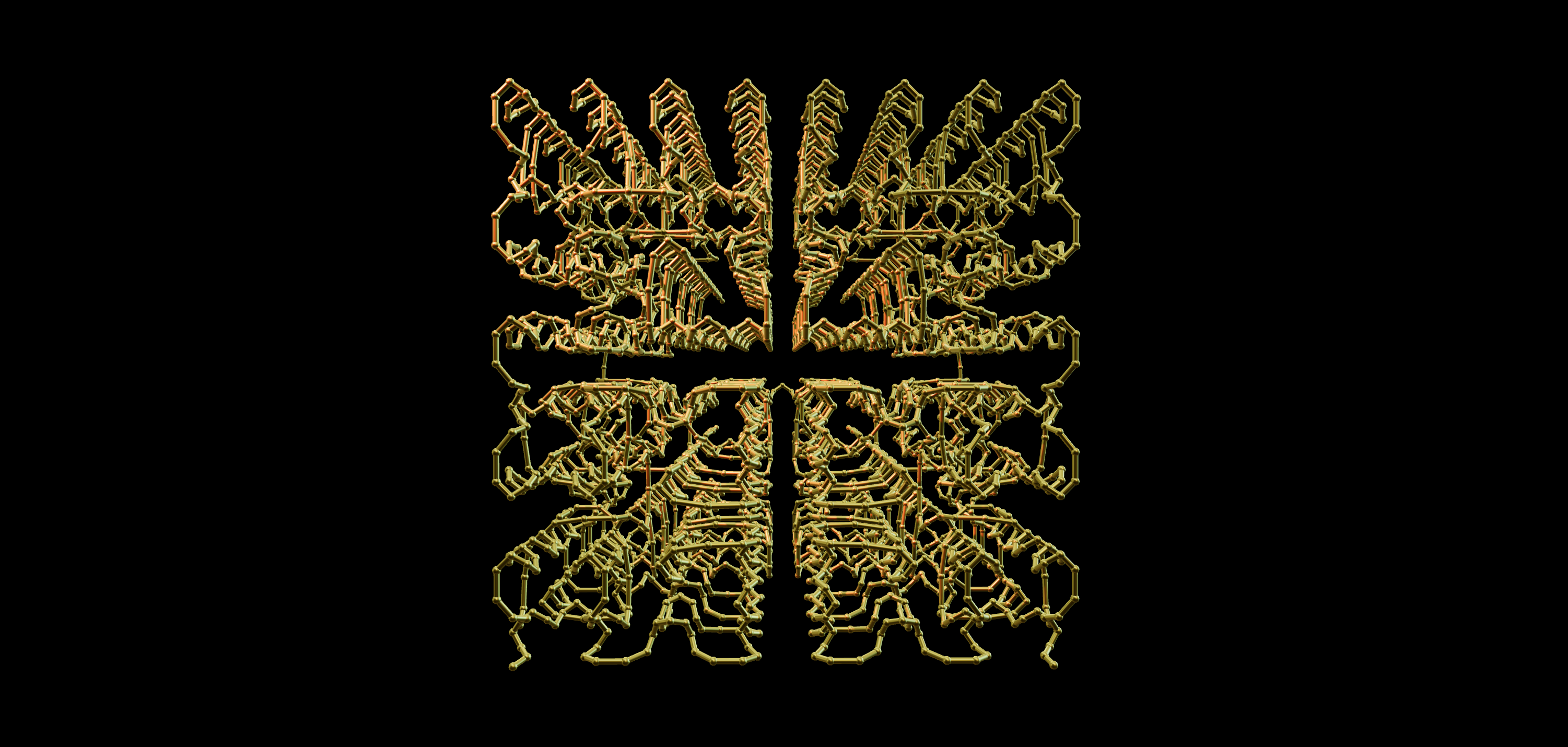
Art Concret
Vera Molnár Homage
Boustrophedonic patterns inspired by algorithmic art pioneers
 © SGDL Innovation SA
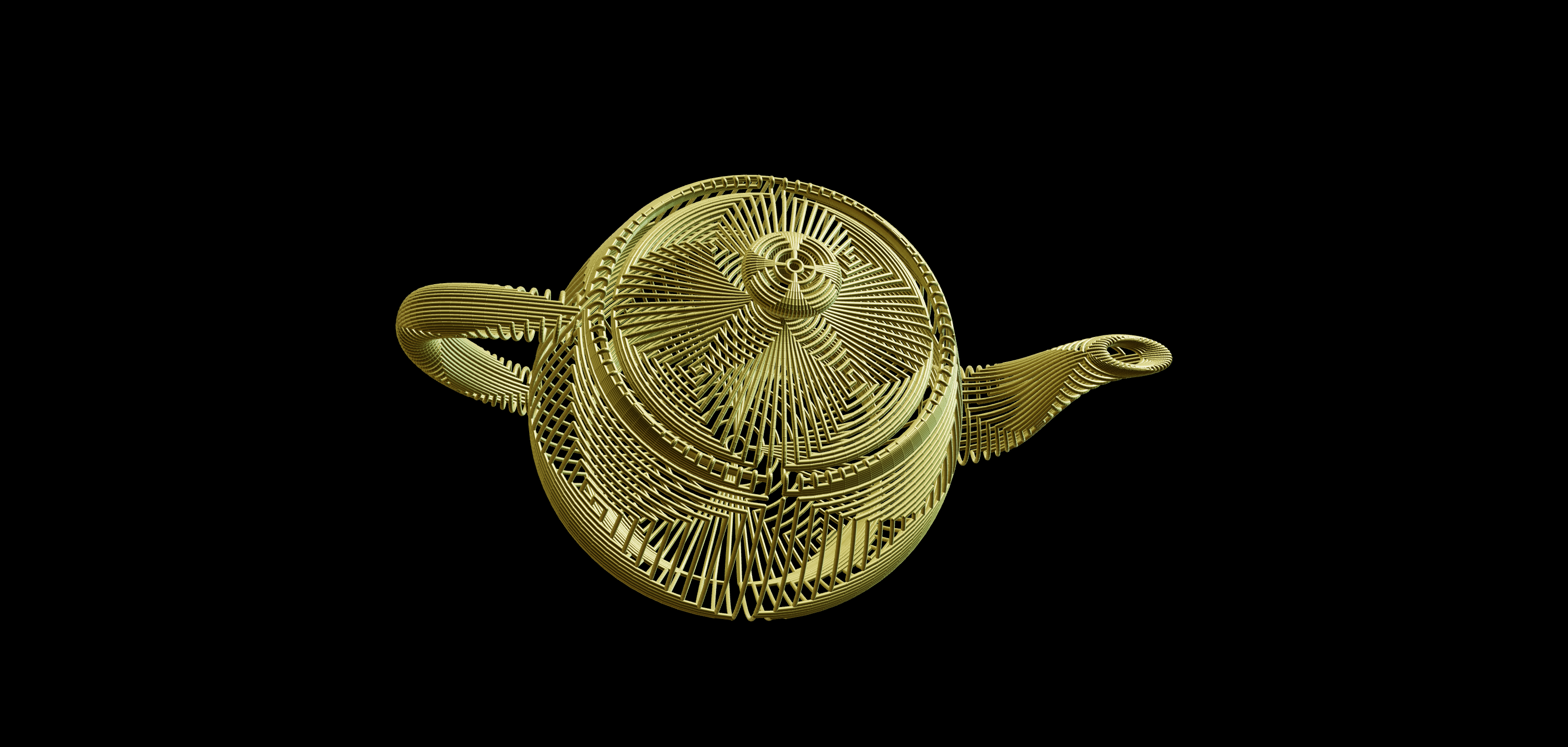
Metacurves
mmA at 16³ Points
Self-similar fractal detail with recursive octant subdivision
 © SGDL Innovation SA
glTF Pipeline
Physically-Based Export
Golden metallic SFC tubes via the v7 exporter
EXPLORE
The Platonic Solids
The Arithmetics of Forms operates on volumetric primitives. Explore the five Platonic solids — the foundational building blocks of geometric reasoning.